Capstone Project for Industry Partners
Partner with Arts and Sciences:
Choose Your Level of Engagement
Every year, Ohio State Arts and Sciences (ASC) students collaborate with industry leaders to solve real-world problems. What sets our students apart is the extraordinary breadth of their expertise. With majors ranging from Data Analytics and Economics to Psychology and Design, our teams bring a multidimensional approach that you won't find elsewhere. Whether you are looking to pilot a new initiative, refine a product, or simply get fresh eyes on a lingering business challenge, our students offer the unique blend of technical skills and creative insight you need.
Why Partner with Us?
- Talent Pipeline: Get an early look at high-potential students entering the workforce.
- Fresh Perspectives: Leverage the "academic heart" of the university—where creativity meets analysis—to solve problems in innovative ways.
- Flexible Commitment: We know business moves fast. We offer two distinct tracks so you can engage at a level that fits your current bandwidth.
Two Ways to Collaborate
We understand that every organization has different resources available. We have designed two tracks to ensure you can participate, whether you have a few hours a semester or a few hours a week.
1. The Partnership Track (Standard Capstone)
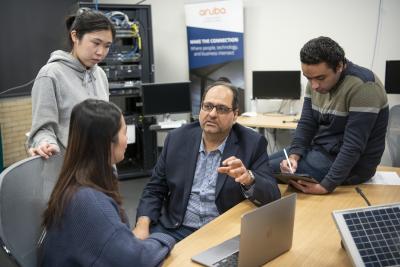
In this track, you act as a client and mentor. You will work closely with a student team over the course of the semester as they navigate a comprehensive design thinking process.
Best for: Organizations seeking a deep-dive solution and mentorship opportunities.
- Your Commitment: Average of 1–2 hours per week.
- The Process: Students engage in scoping, planning, execution, and assessment. You provide feedback and guidance as they iterate on the solution.
- The Outcome: A tangible prototype, comprehensive strategy, or detailed implementation plan.
Benefit: You receive a thoroughly researched and tested solution while building strong relationships with potential future hires.
2. The Case Study Track
If you have a business challenge but cannot commit to weekly meetings, the Case Study track is the perfect fit. You provide the data and the problem; the students provide the solution.
Best for: Organizations with limited time or “back-burner” projects needing fresh ideas.
The Process: Students take your prompt and run with it, applying their course learnings to analyze the issue independently. As part of the case study, employers will be expected to conduct 1–2 brief check-ins with students to confirm they are on the right track, answer questions, and provide any additional data or context needed from the organization.
The Outcome: A presentation of findings, data analysis, or conceptual recommendations.
Benefit: You gain high-impact insights and alternative viewpoints on a specific problem without the administrative burden of weekly management.
What Makes a Great Project?
Whether you choose the Partnership or Case Study track, successful projects share a few key traits. The goal is to let students apply Critical Thinking, Innovation, and Feasibility analysis to your work.
- Focus on "Important," not "Urgent": Academic timelines differ from business speed. Please submit projects that are valuable to your long-term goals but not mission-critical for the immediate quarter.
- Navigating Ambiguity: The best projects allow students to struggle a little! We want them to help define the problem, not just execute a checklist.
- Tech Integration: We encourage projects that ask students to ideate and incorporate technology—whether testing new tools or evaluating existing ones.
- Real-World Relevance: The challenge should address a genuine stakeholder need, allowing students to practice empathy and user-centric design.
Project Proposal Submission
Ready to submit? After deciding which track suits your schedule, please submit your proposal via our online portal. You can indicate your preferred track within the form.
Not sure which track is right for you? If you have questions about the process or want support framing a project to align with these criteria, we are here to help.
Please contact Scott Kustis at kustis.1@osu.edu.